01 Crisis and Hope
More than 5,000 years ago, as the blossoms of civilization bloomed across the vast land of China, the Chengdu Plain—isolated by towering mountains—remained a realm of obscurity.
(At this time, the Chengdu Plain was dotted with marshes and pools, a territory yet untouched by human footsteps. Map by @Chen Zhihao / Planet Institute)
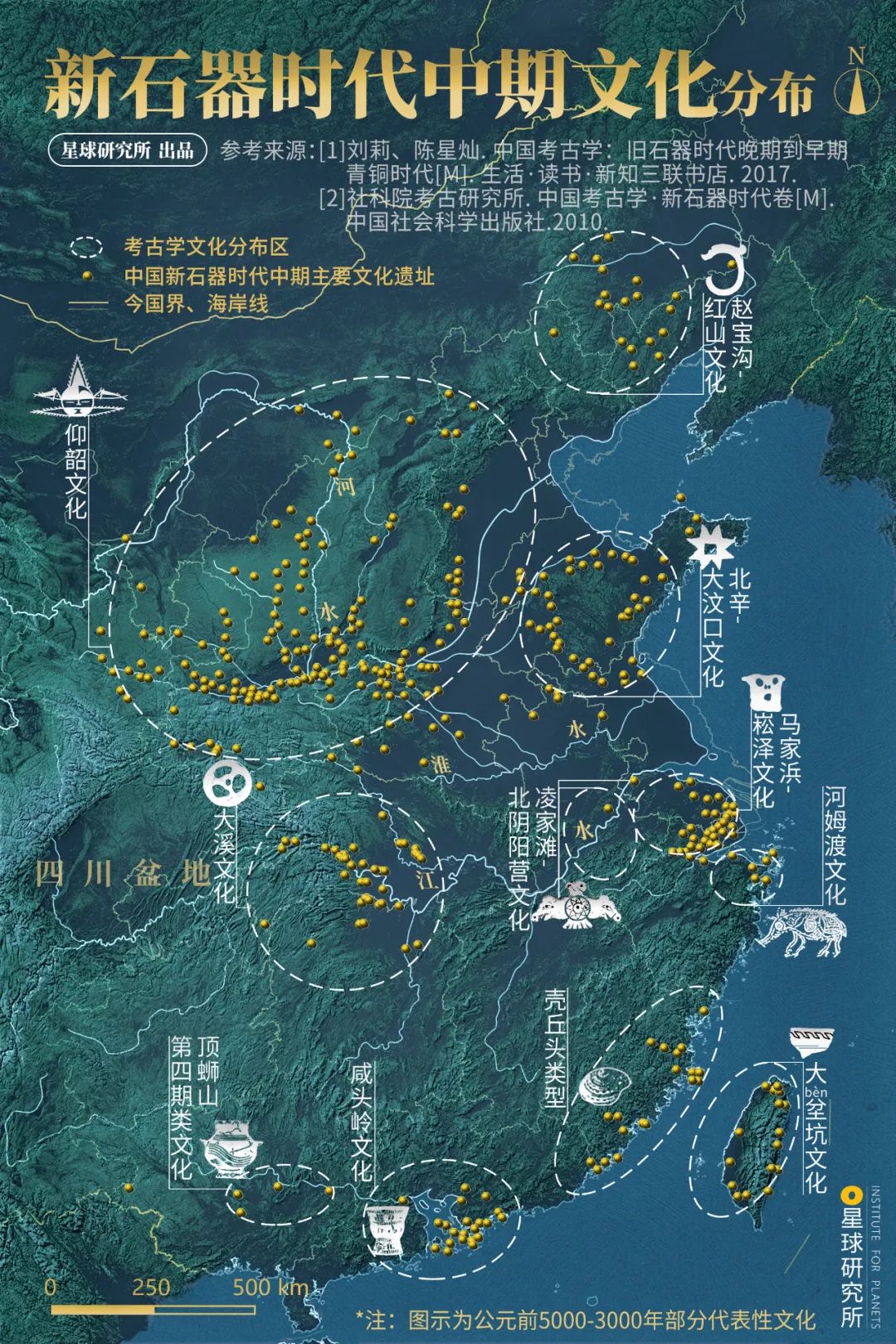
Perhaps driven by shifting climatic conditions,
the people inhabiting the Western Sichuan Plateau
embarked upon a migration that spanned centuries.
They eventually arrived at the Chengdu Plain—
reaching this veritable “Shangri-La.”
(Please view in landscape mode. During this period, the climate was cold and arid, and droughts were widespread across the region; consequently, the Chengdu Plain—blessed with abundant water sources—emerged as an ideal place for settlement. Image source: @Visual China)
Perhaps, at that moment, they did not yet realize
what a magnificent civilization—
in the not-too-distant future—
they were destined to forge upon this very plain.
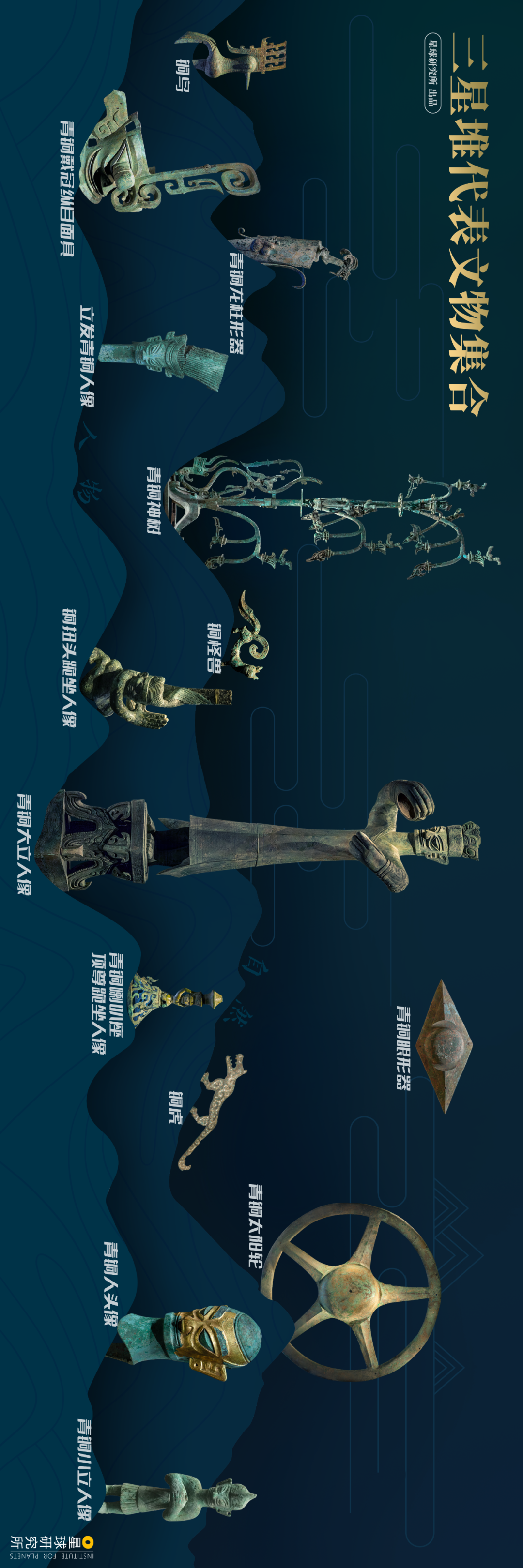
(The Chengdu Plain gave birth to the brilliant ancient Shu culture. Map by @Chen Zhihao / Planet Institute)
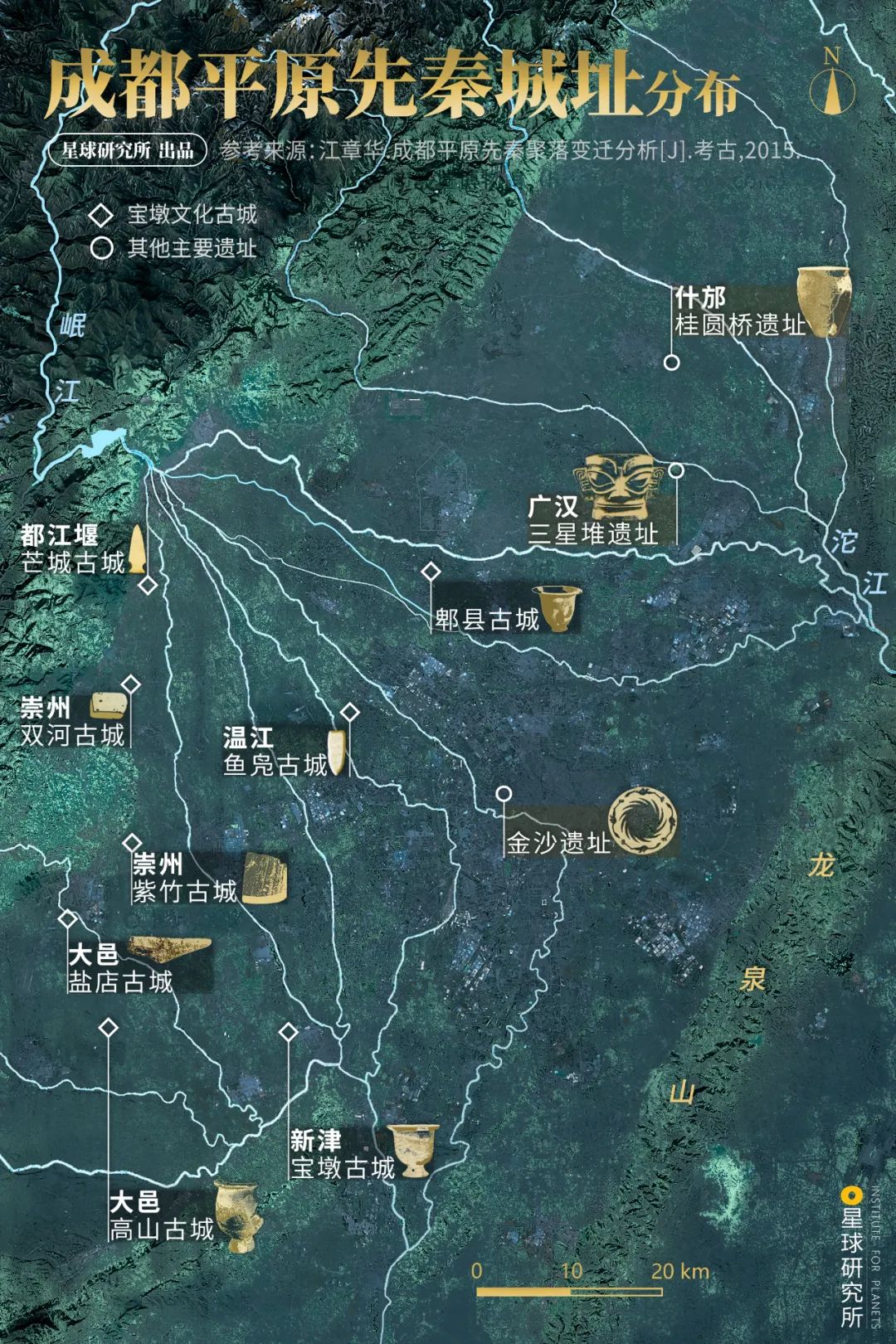
To the south of the Yazi River—a tributary of the Tuo River—lies a terrace shaped like a crescent moon. Further south stand three small earthen mounds, locally known as “Sanxingdui” (Three Star Mounds). It was right here, approximately 3,800 years ago,
that a brand-new city was born.
(The ancient city of Sanxingdui featured clearly defined functional zones. Graphics by @Wang Shenwen / Planet Institute)
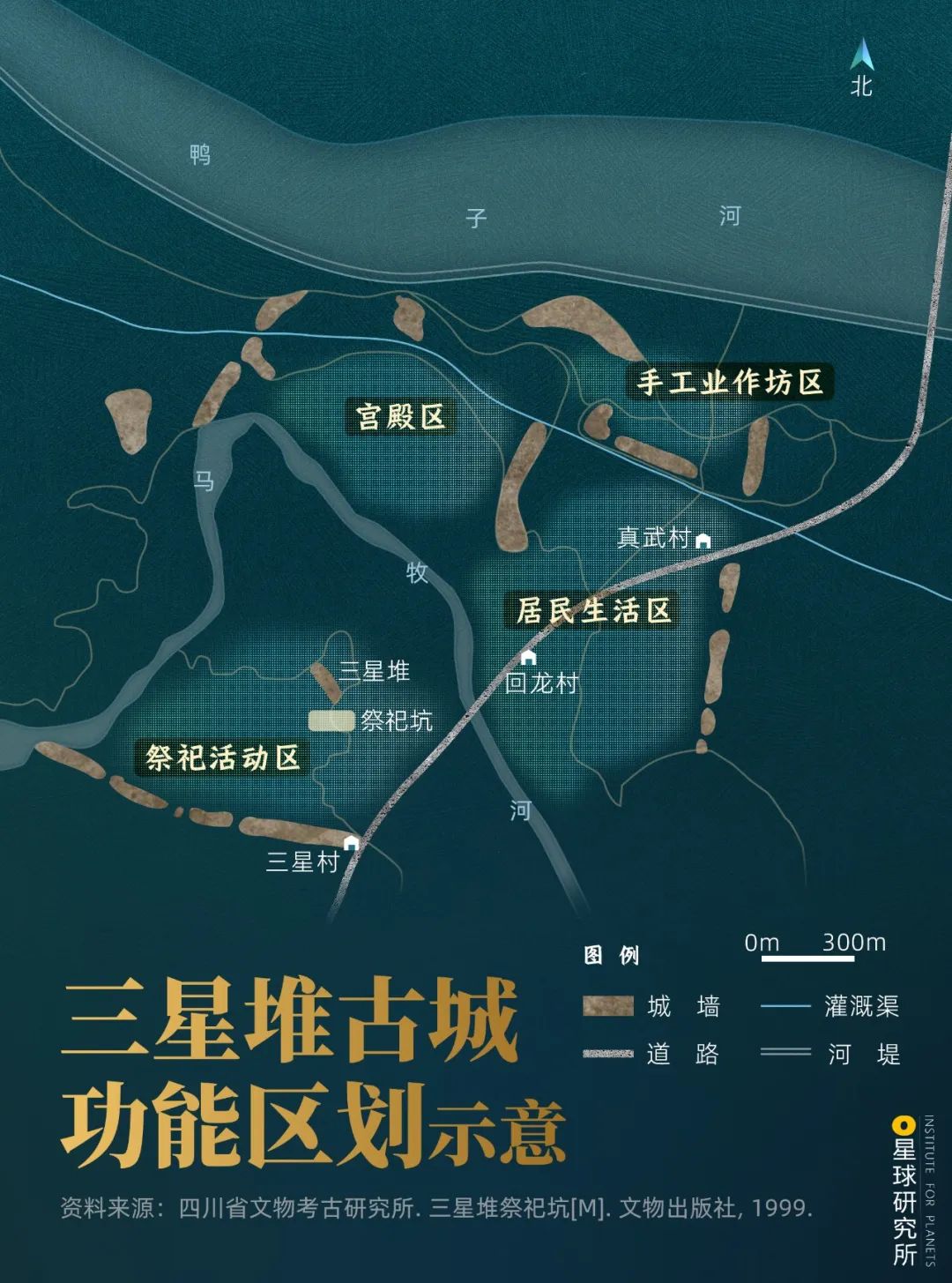
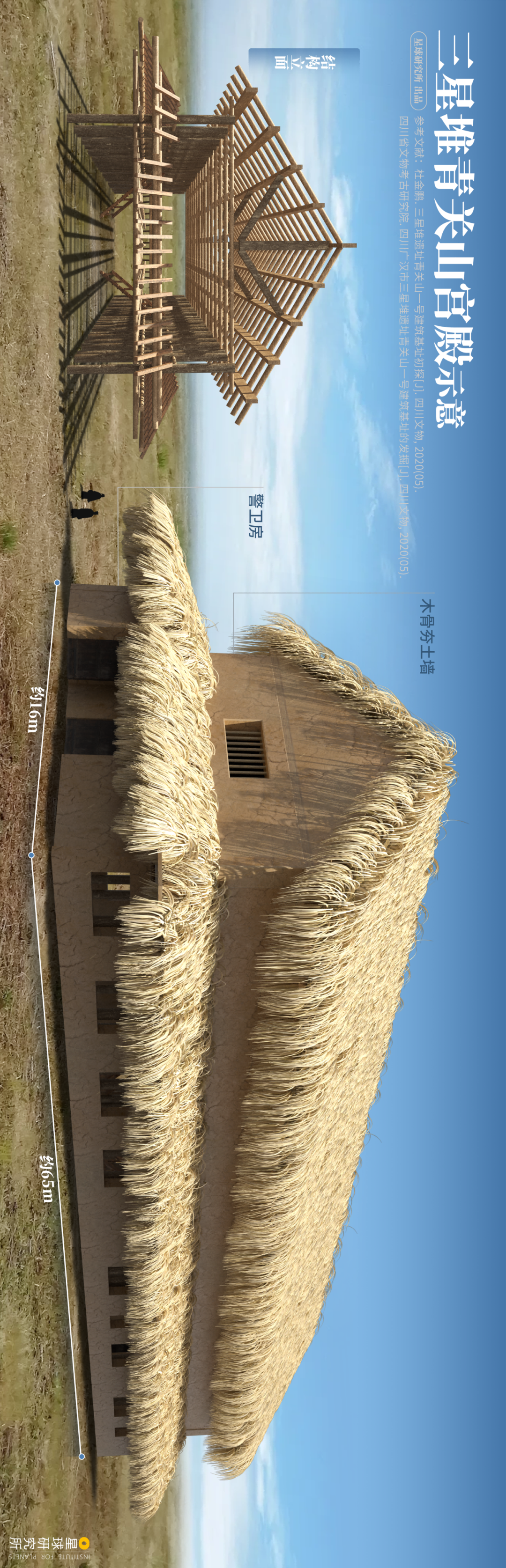
The northern part of the city served as the palace district. Here stood a massive, artificially rammed-earth platform, atop which majestic palaces rose.
(Please view in landscape mode. The Qingguanshan Palace covers an area of approximately 1,000 square meters, making it one of the largest single structures from the Shang Dynasty in China. Some theories also suggest it served as a dedicated shrine for storing ritual artifacts. Graphics by @Feng Yizhuo / Planet Institute)
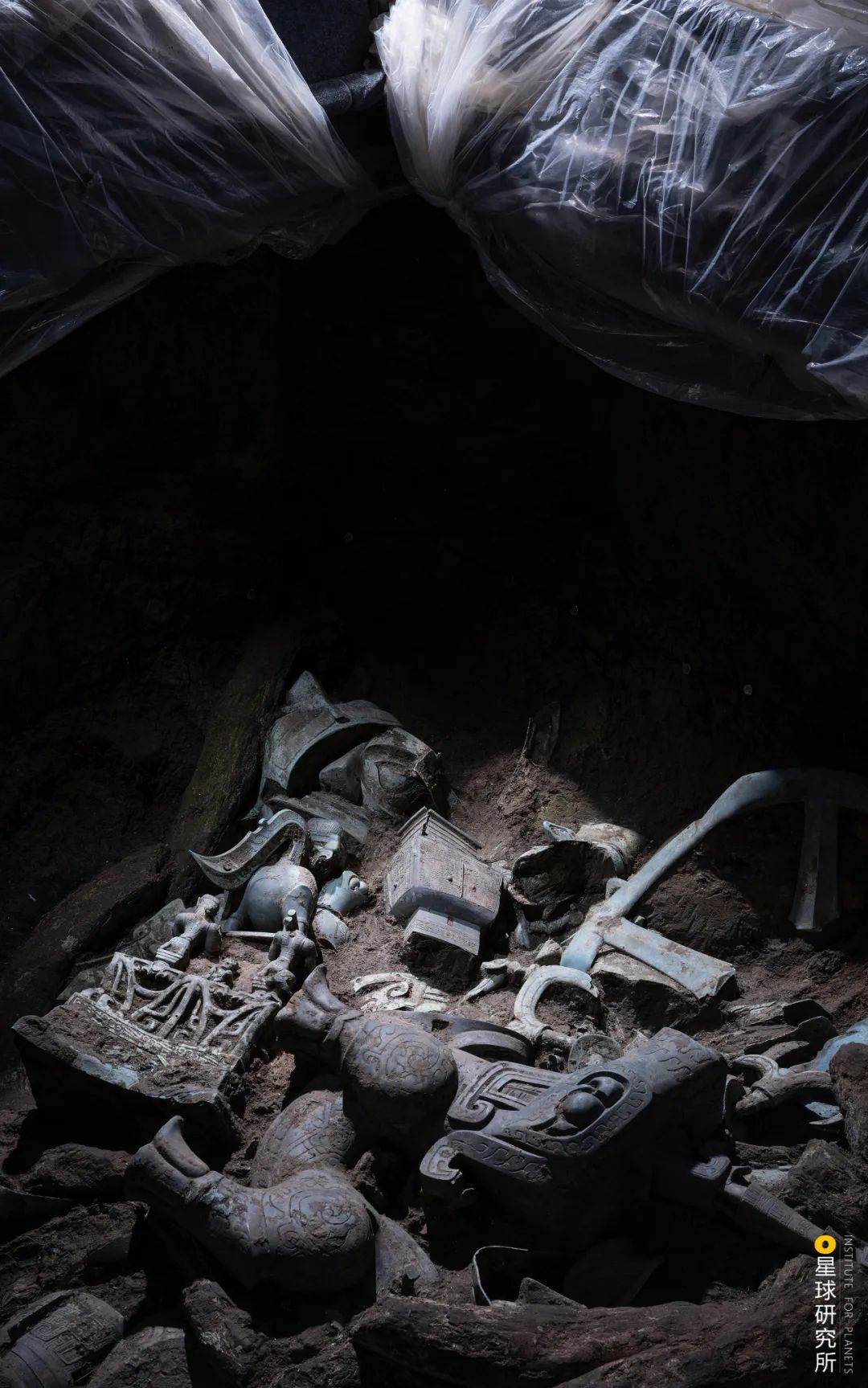
The southwestern sector of the city was designated as the sacrificial zone. It was here that people conducted their ritual ceremonies; the precious ceremonial vessels used during these rites were subsequently buried here, one by one.
(Bronze artifacts recovered from the Sanxingdui sacrificial pits. Photography by @Yu Jia)
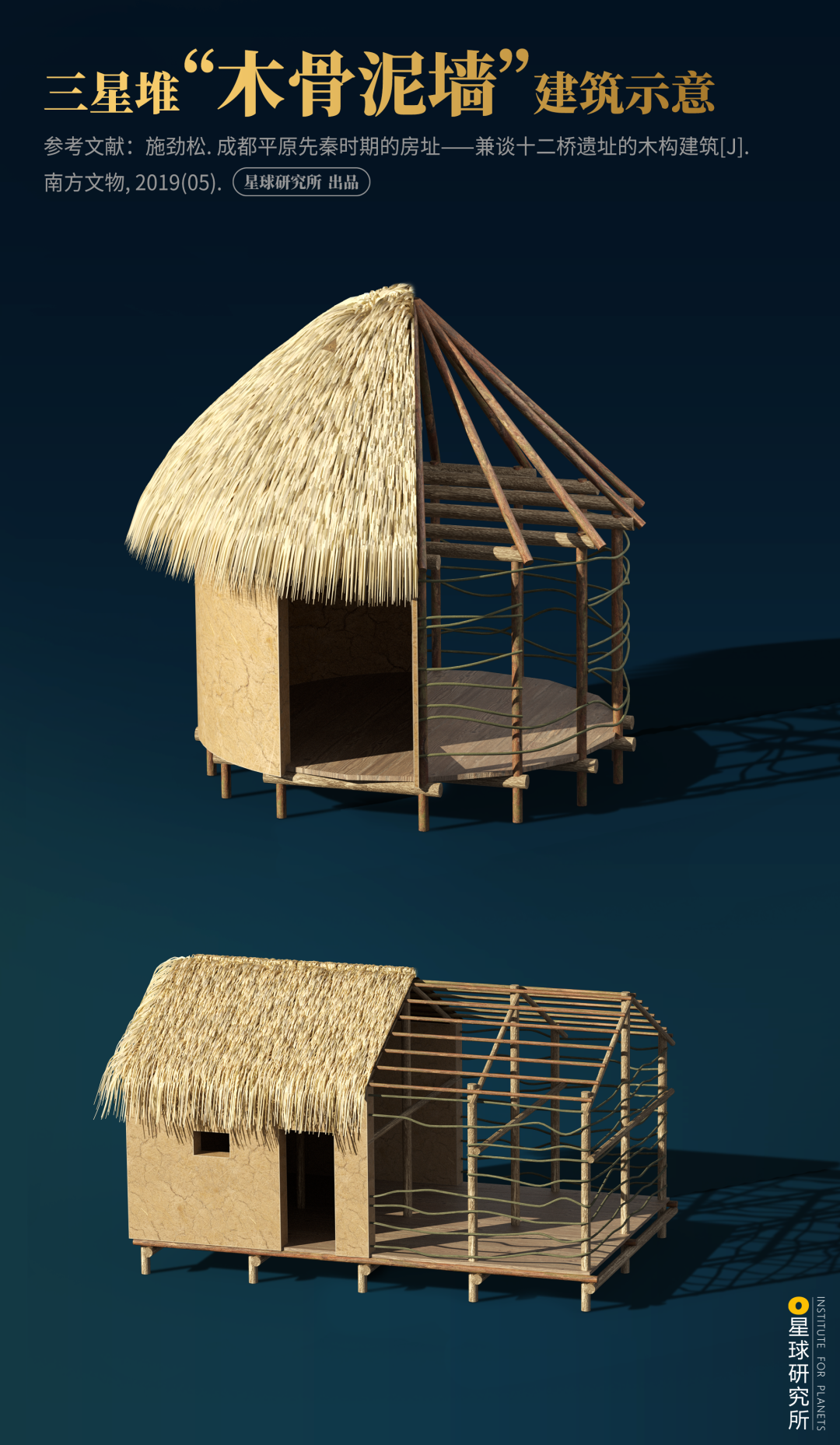
Ordinary residents, meanwhile, lived in other parts of the city, constructing their homes using a “wattle-and-daub” (timber-frame and mud wall) technique.
(The framework of the house was constructed using round logs, into which walls woven from bamboo strips were embedded; finally, a mixture of mud and straw was plastered onto both sides of the walls, and the roof was thatched with straw. Illustration by @Feng Yizhuo / Planet Institute)
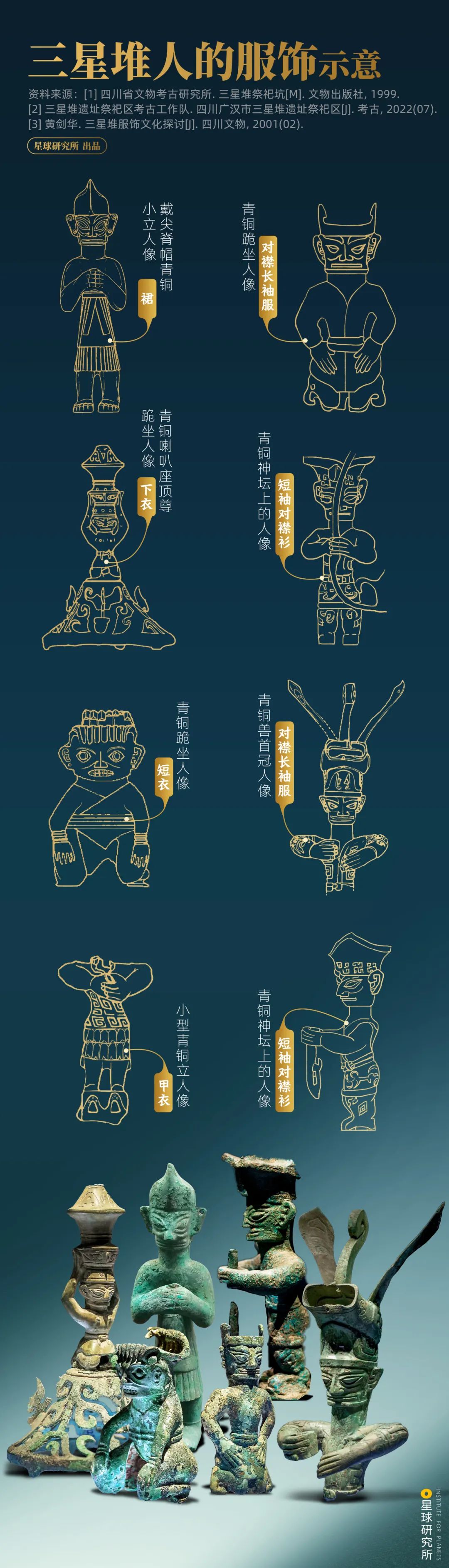
Here, they raised silkworms and reeled silk,
weaving garments adorned with intricate patterns.
(Sichuan is one of the key cradles of Chinese silk production; during the era of the Sanxingdui culture, the level of silk craftsmanship had already reached a remarkable maturity. Photographers: @Wu Yu, @Tan Benjian, & @Feng Yizhuo; Illustration by @Wang Shenwen / Planet Institute)
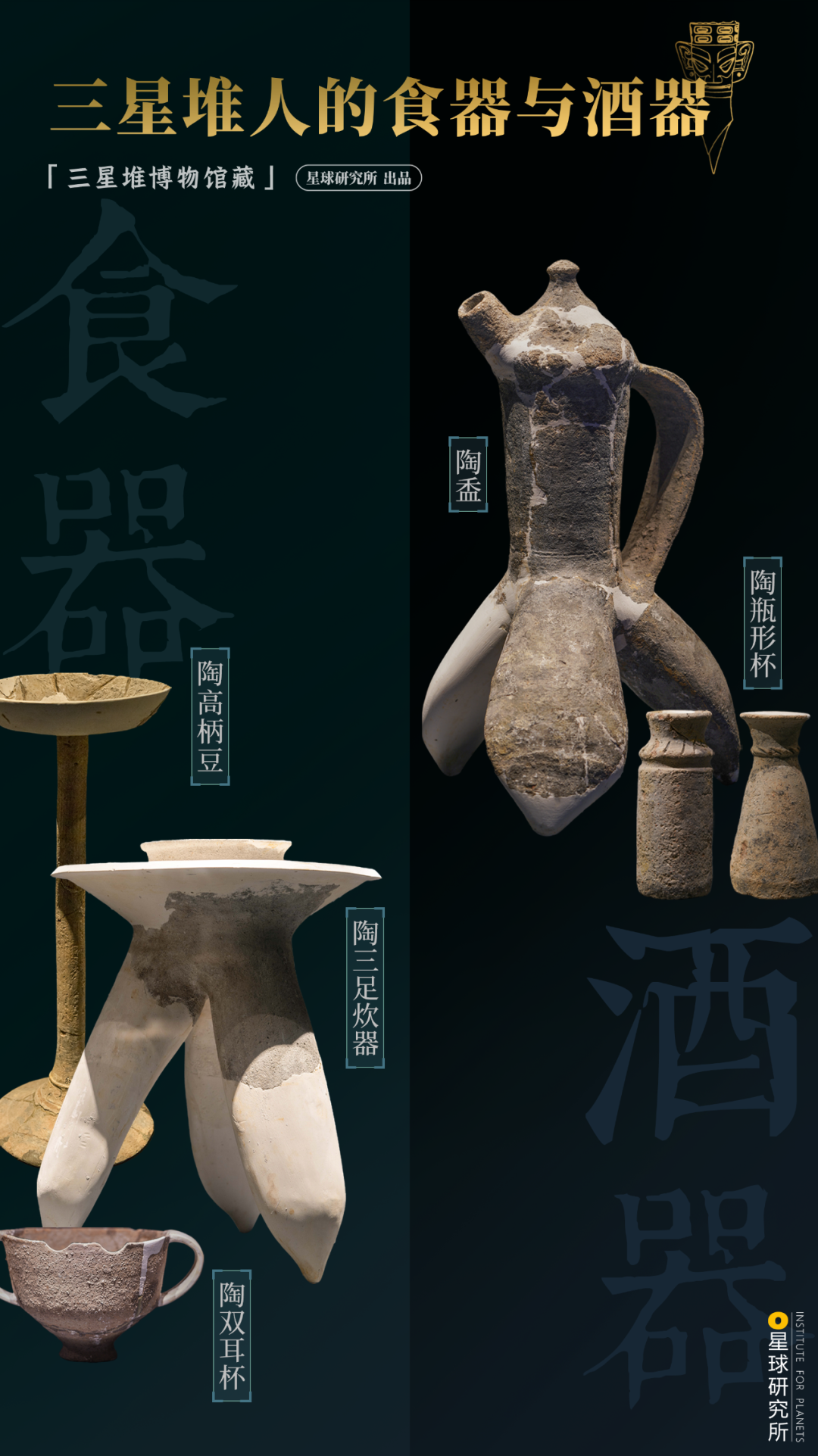
Here, they cultivated rice; surplus grain was used to brew alcohol. After a day of arduous labor, the people would gather to enjoy a “hot pot” meal accompanied by a bit of wine—living a life that was simple yet joyful.
(The tripod cooking vessel allowed for a fire to be lit directly beneath its legs, while its wide, open basin was used to steam and boil food—bearing a resemblance to the modern-day hot pot. Photographers: @Zhang Yan & @Tan Benjian; Illustration by @Feng Yizhuo / Planet Institute)
Yet, beneath the seemingly tranquil surface of life,
lurked hidden crises and unease.
The abundant water sources—
while nurturing the fertile lands of the Chengdu Plain—
also planted a ticking time bomb
for the people of Sanxingdui, who dwelt along the riverbanks.
The looming shadow of floods
hung over them at every moment.
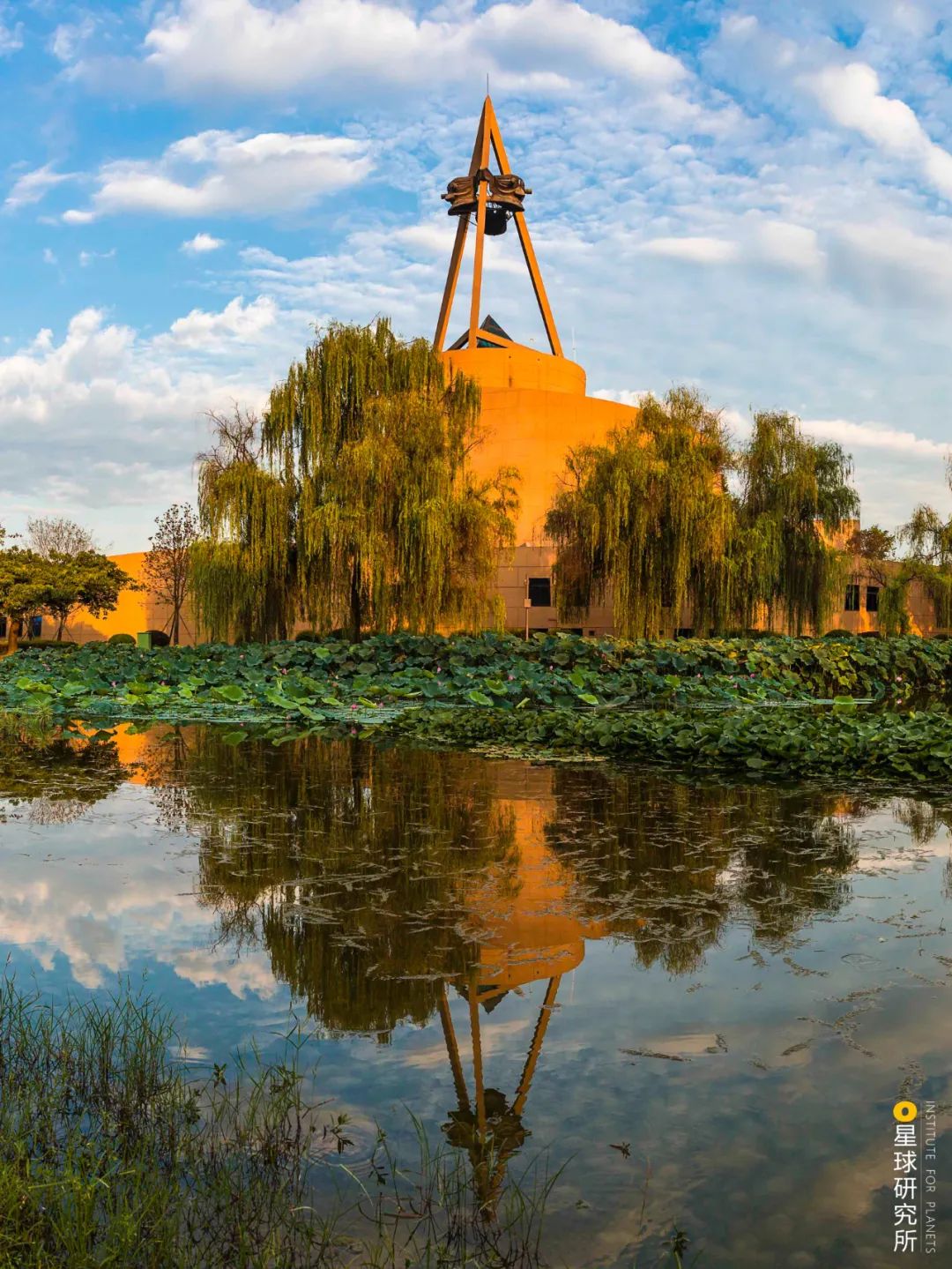
(The ancient city of Sanxingdui was built alongside the river; pictured here is the Sanxingdui Museum—shown for illustrative purposes only. Photo by @Chen Lianghua)
With the perils of nature yet unresolved,
and as a nascent state,
Sanxingdui was compelled to remain constantly vigilant
against hostile forces in the surrounding regions.
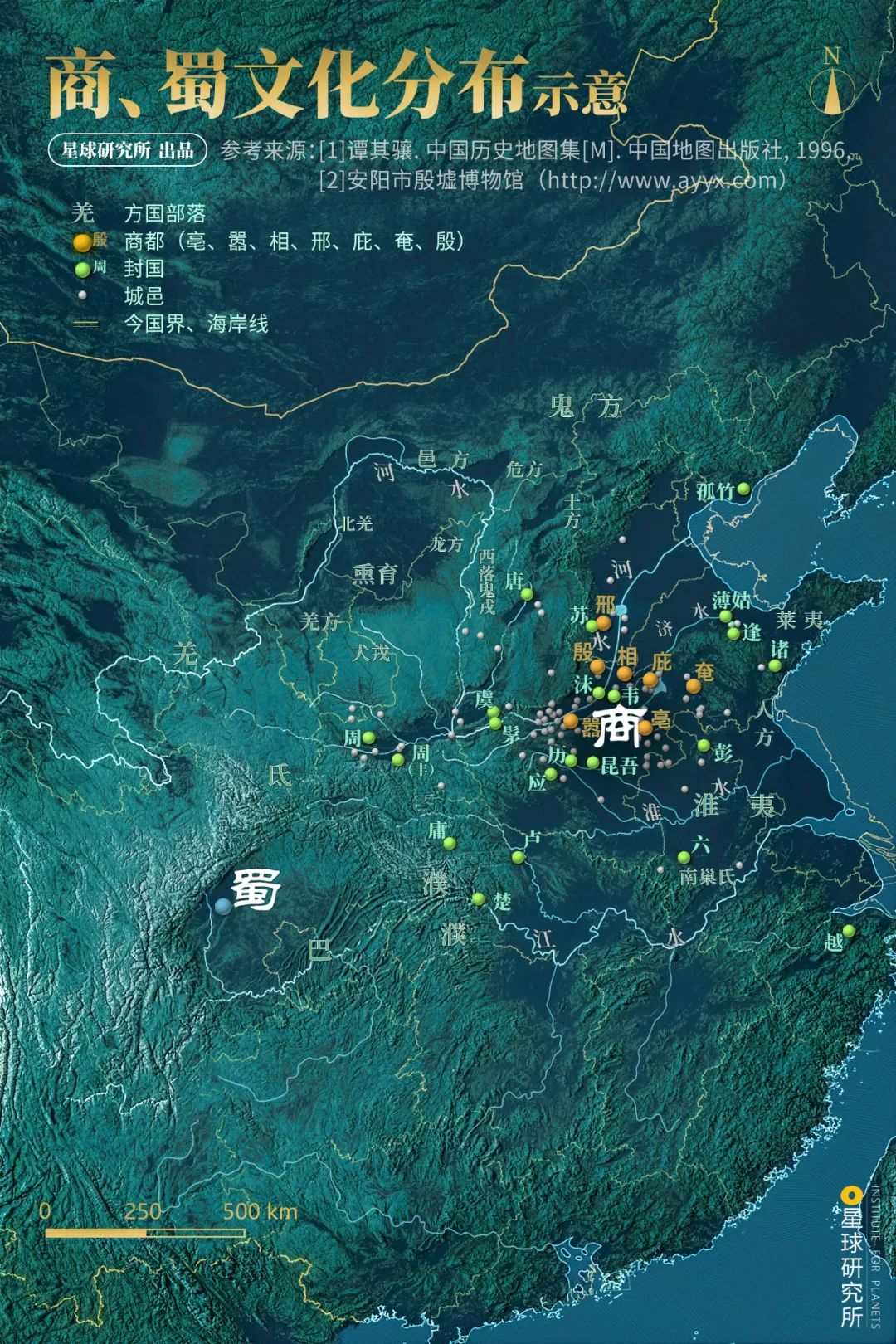
(According to oracle bone inscriptions from the Ruins of Yin, a series of conflicts and peace accords took place between the Shang Dynasty and the Kingdom of Shu. Graphics by @Chen Zhihao / Planet Research Institute)
Confronted by these manifold threats—and still grappling to comprehend them—the people of Sanxingdui cast their hopes toward the realm of the divine. Perhaps the power of the gods would aid them in safeguarding their homeland.
To awaken this power, they resolved to open a gateway to another universe.