03 Cosmic Collapse
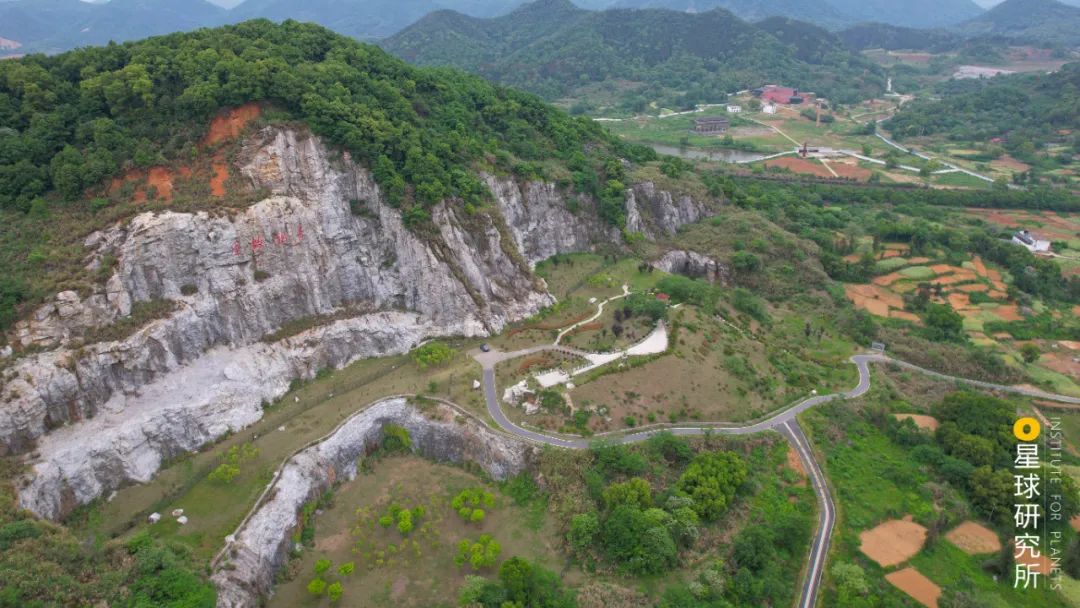
To awaken another universe, the price exacted may far exceed imagination. The total weight of the bronzeware unearthed from the sacrificial pits at Sanxingdui exceeds one ton. Based on the metallurgical techniques available at the time, crafting bronzeware on such a massive scale would have required the consumption of at least several thousand tons of raw ore. However, no large-scale copper mines dating to the same period have yet been discovered in the vicinity of Sanxingdui. This implies that vast quantities of ore likely had to be transported from distant Yunnan or Jiangxi.
(Pictured: The Tongling Copper Mine Site in Ruichang, Jiangxi. Jiangxi is rich in copper resources and may have served as one of the source regions for the copper used at Sanxingdui. Photo by @Kang Ziji)
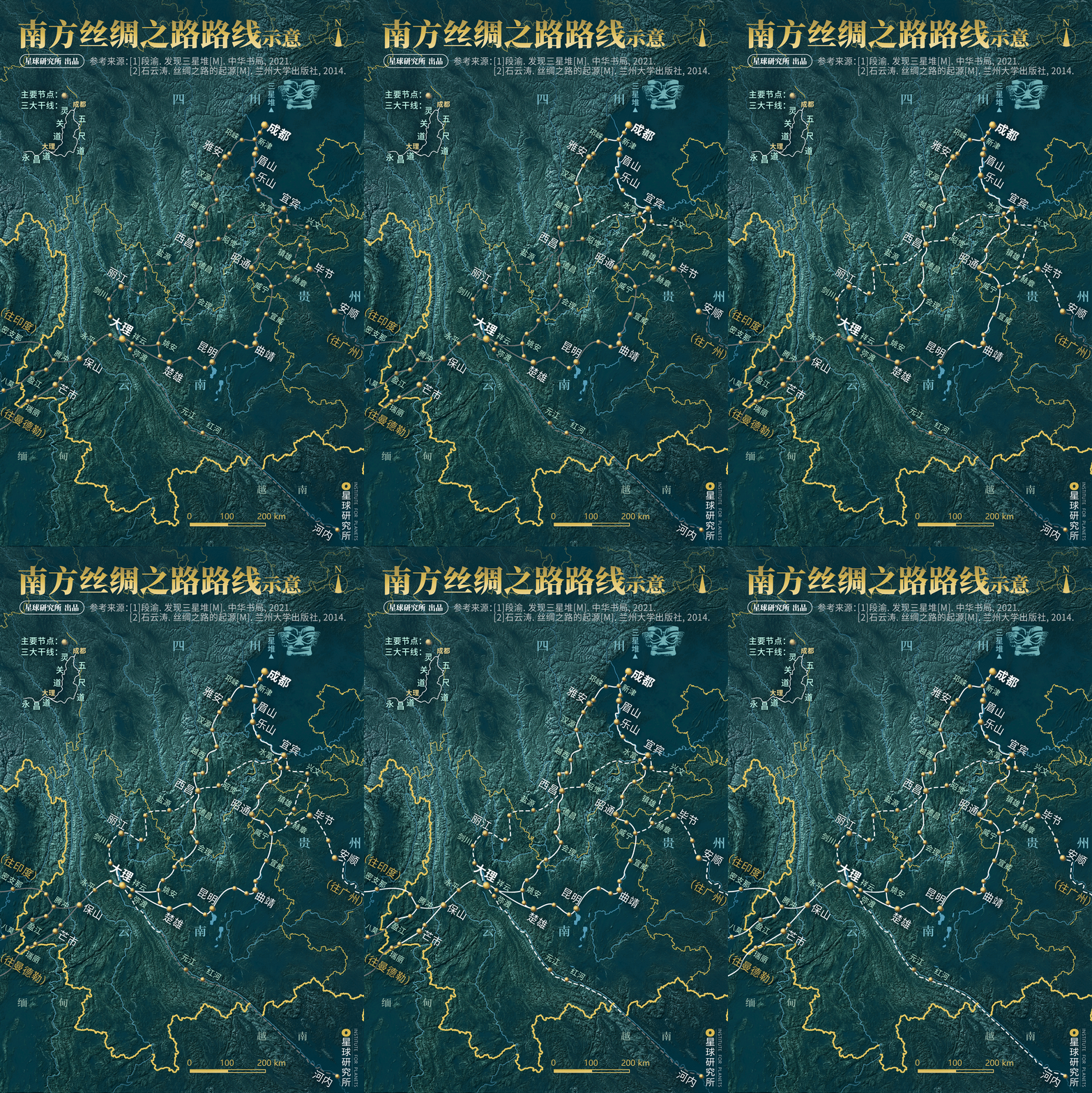
Countless seashells—
Traversing the “Shu-Shendu Route”—
Journeyed from the distant South China Sea, India, and Myanmar,
To become wealth offered in tribute to the deities.
(The “Shu-Shendu Route” is also known as the Southern Silk Road; “Shendu” is an ancient name for India. Some of the seashells unearthed at Sanxingdui originated from coastal regions of the Indian Ocean and may have been utilized as currency. Map by @Chen Zhihao / Planet Institute)
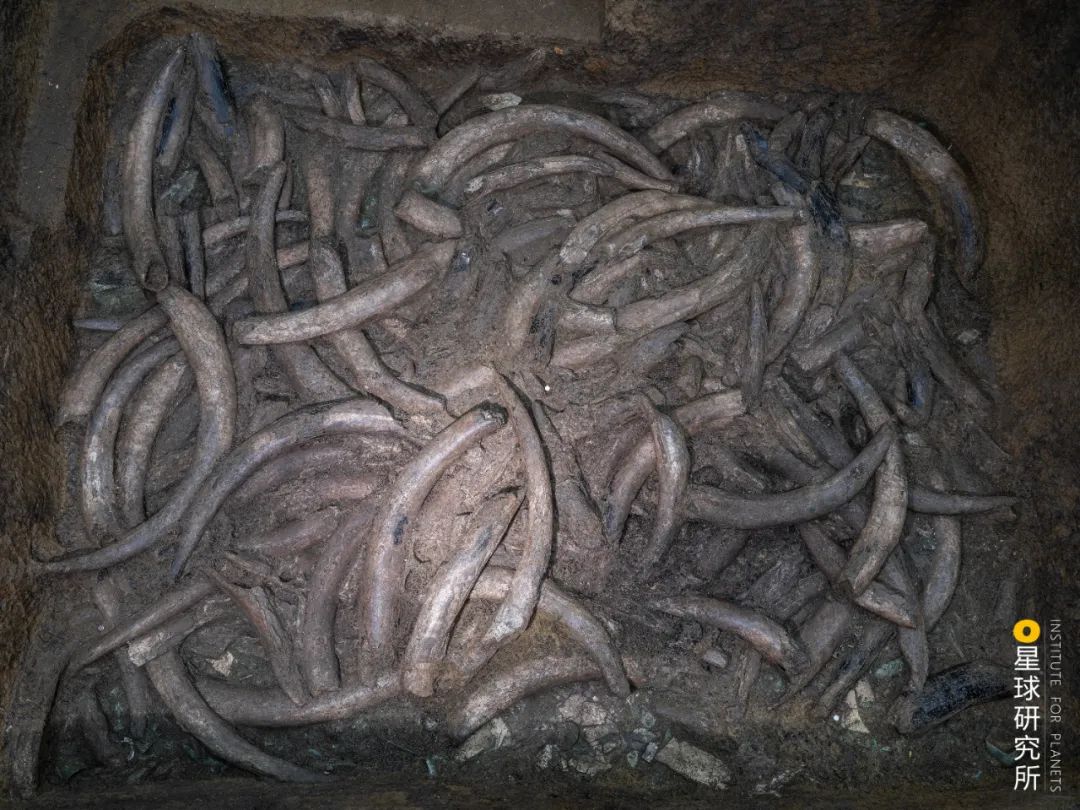
A single tusk from an adult male Asian elephant
Can weigh upwards of one hundred jin (approx. 50 catties)
Hundreds of such tusks remain at Sanxingdui
Acquiring such a substantial quantity of these colossal objects
Was by no means an easy feat
(Elephant tusks found within the Sanxingdui sacrificial pits; some theories suggest that a portion of these tusks may have originated from the ancient Indian subcontinent, while other scholars believe they came from the Chengdu Plain. Photographer: @Yu Jia)
Among the artifacts offered up as sacrifices,
Some represented a nation’s most strategically vital resources;
Others constituted its most precious material wealth.
Yet, after expending immeasurable human and material resources,
They were all ultimately reduced to mere offerings—gifts intended to appease the divine powers.
(Fragmented bronze artifacts found within the Sanxingdui sacrificial pits. Photographer: @Yu Jia)
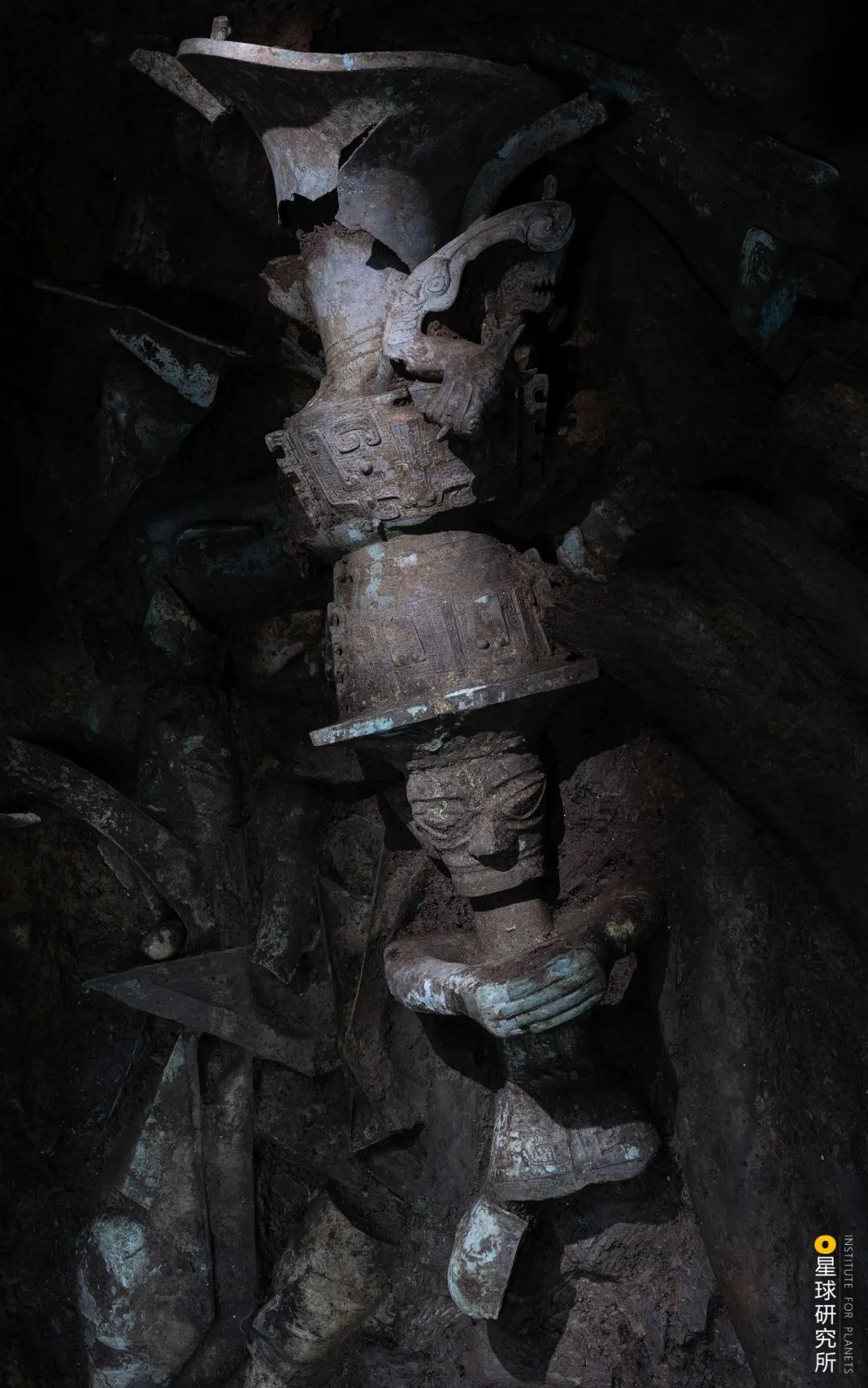
The divine realm, forged through the total mobilization of national power,
Proved in the end to be nothing more than an act of self-delusion.
This excessive concentration of resource consumption
Severely stifled normal productive activities,
Leaving the nation beset by both internal strife and external threats. The situation is increasingly dire.
The once theocratic ancient state
has been pushed to the brink of collapse.
Perhaps it is the renewed floods that have submerged the farmland upon which the Sanxingdui people depended for survival.
Perhaps it is the escalating internal conflicts that have plunged Sanxingdui into a prolonged period of turmoil.
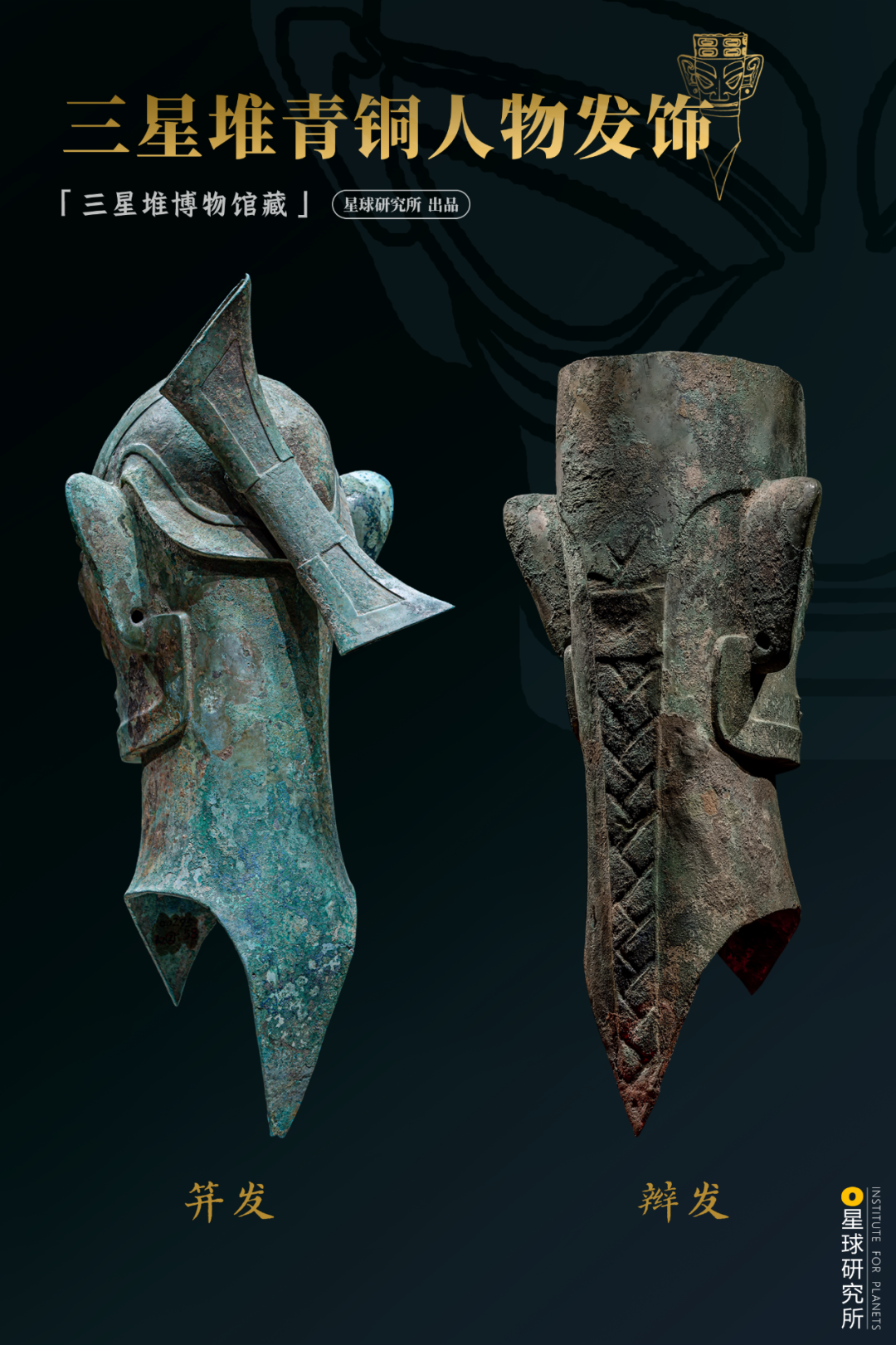
(Some scholars speculate that there may have been a power shift within Sanxingdui, with the community represented by braided hair replacing the community represented by hairpins. Photographer: @Zhang Yan, Illustration: @Feng Yizhuo/Planet Research Institute)
Regardless of the crisis,
the Sanxingdui people were powerless to reverse the tide.
Perhaps they tried to use a final sacrifice to
pray for the flood to subside.
Perhaps the victor in the struggle
destroyed the former beliefs of their opponent.
Whatever the reason,
the Sanxingdui people ultimately destroyed their own temple.
All the ritual objects within the temple were also smashed and buried after a grand ceremony.
(The Sanxingdui burial pits mainly date to the late Shang Dynasty. Although the cause of their formation is still inconclusive, it is certain that the last glories of the Sanxingdui civilization are buried here. Video source: @Sanxingdui Museum, illustration: @Feng Yizhuo/Planet Research Institute)
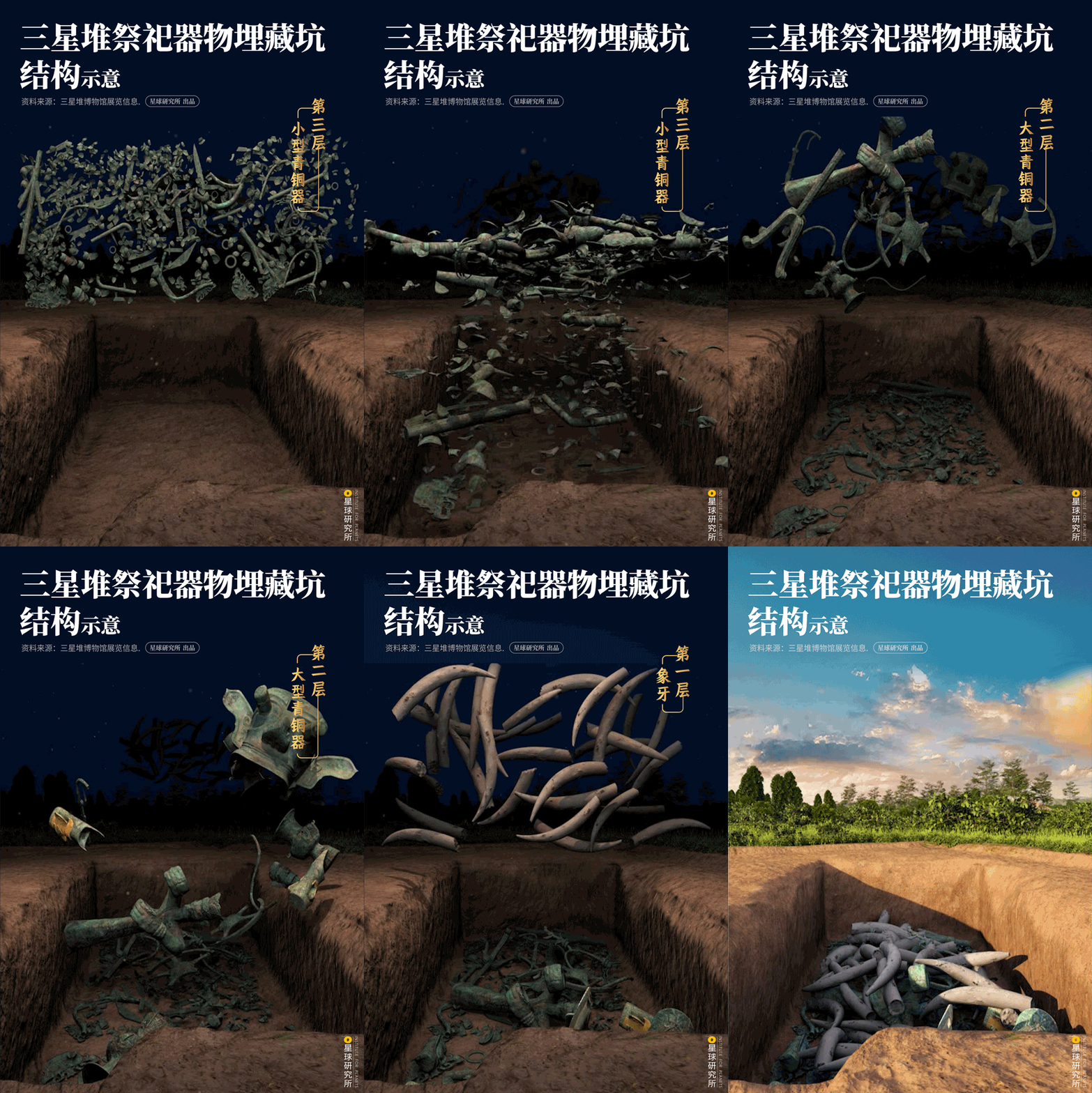
This was their final sacrificial rite in the face of catastrophe—
and their ultimate farewell to the gods.
Thus, this once-flourishing Bronze Kingdom
met its final curtain.
(The Sanxingdui Museum at sunrise; Photo by @Zhan Ling)
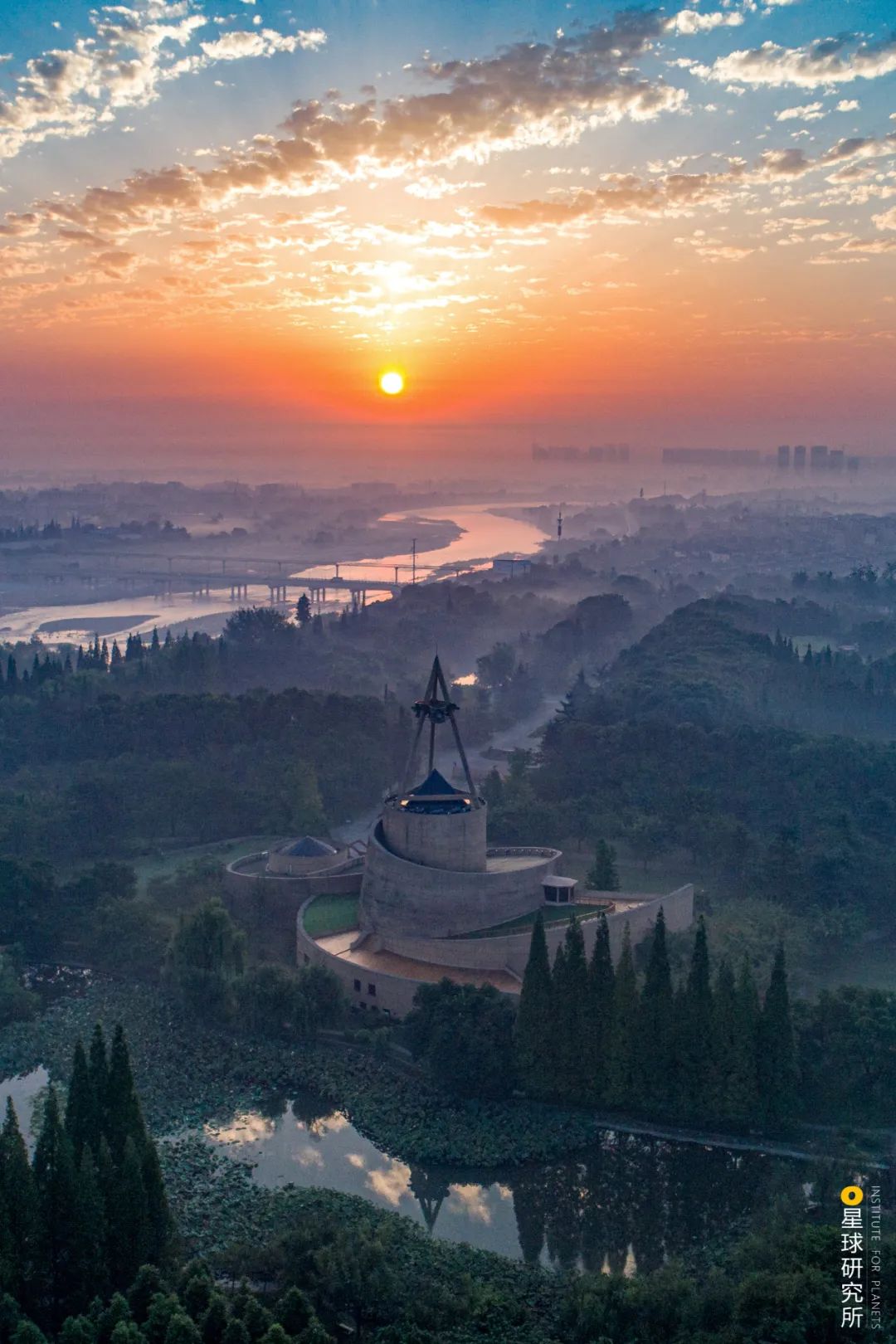
Did Sanxingdui vanish forever? Not far away—situated atop the Jinsha site in the western suburbs of Chengdu—the answer may well lie.
(The Jinsha site is located in Jinsha Village, Chengdu, Sichuan Province, approximately 40 kilometers from the Sanxingdui site. Graphics by Chen Zhihao / Planet Research Institute.)
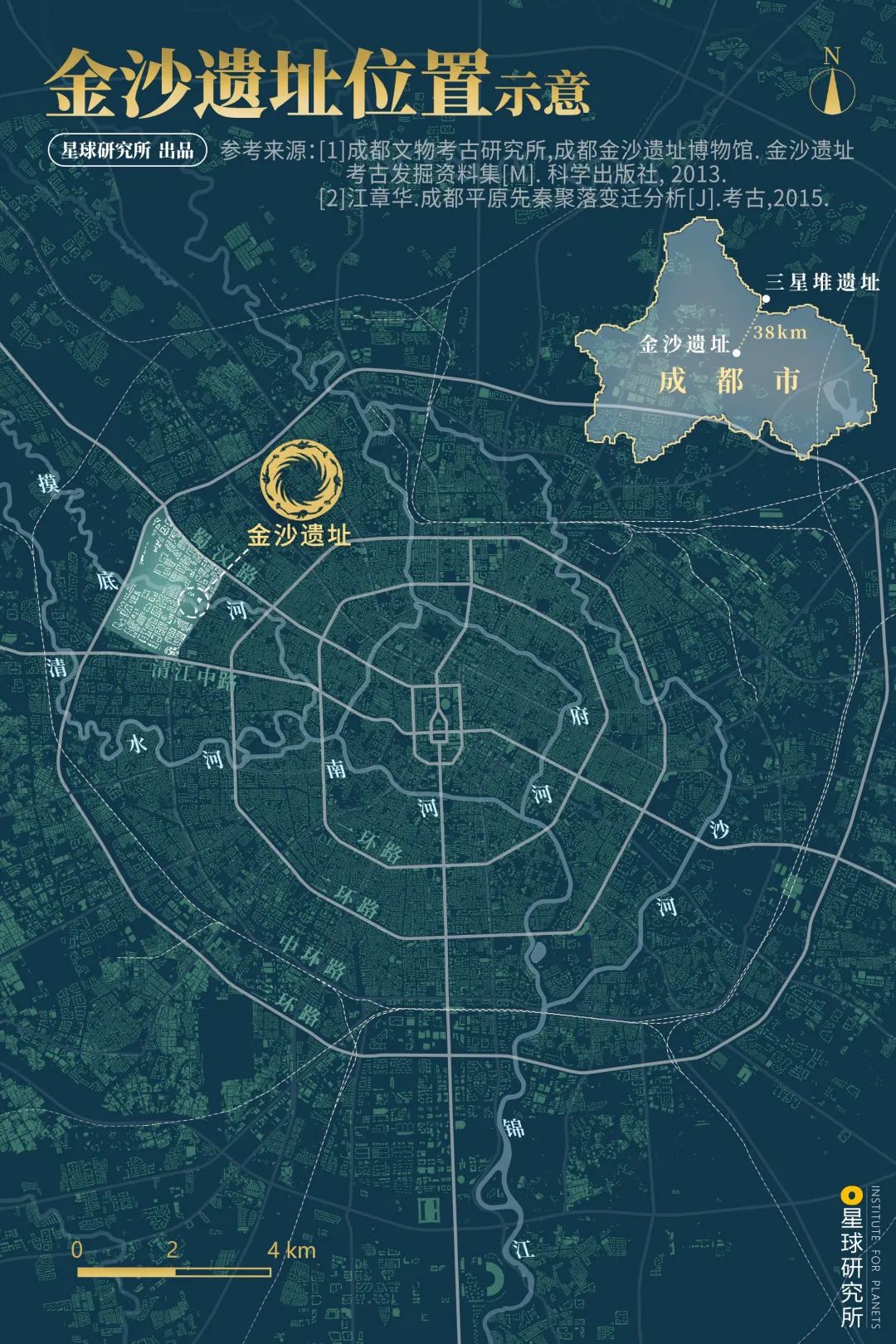
This was a central hub of a metropolitan nature that rose to prominence during the Late Shang period.
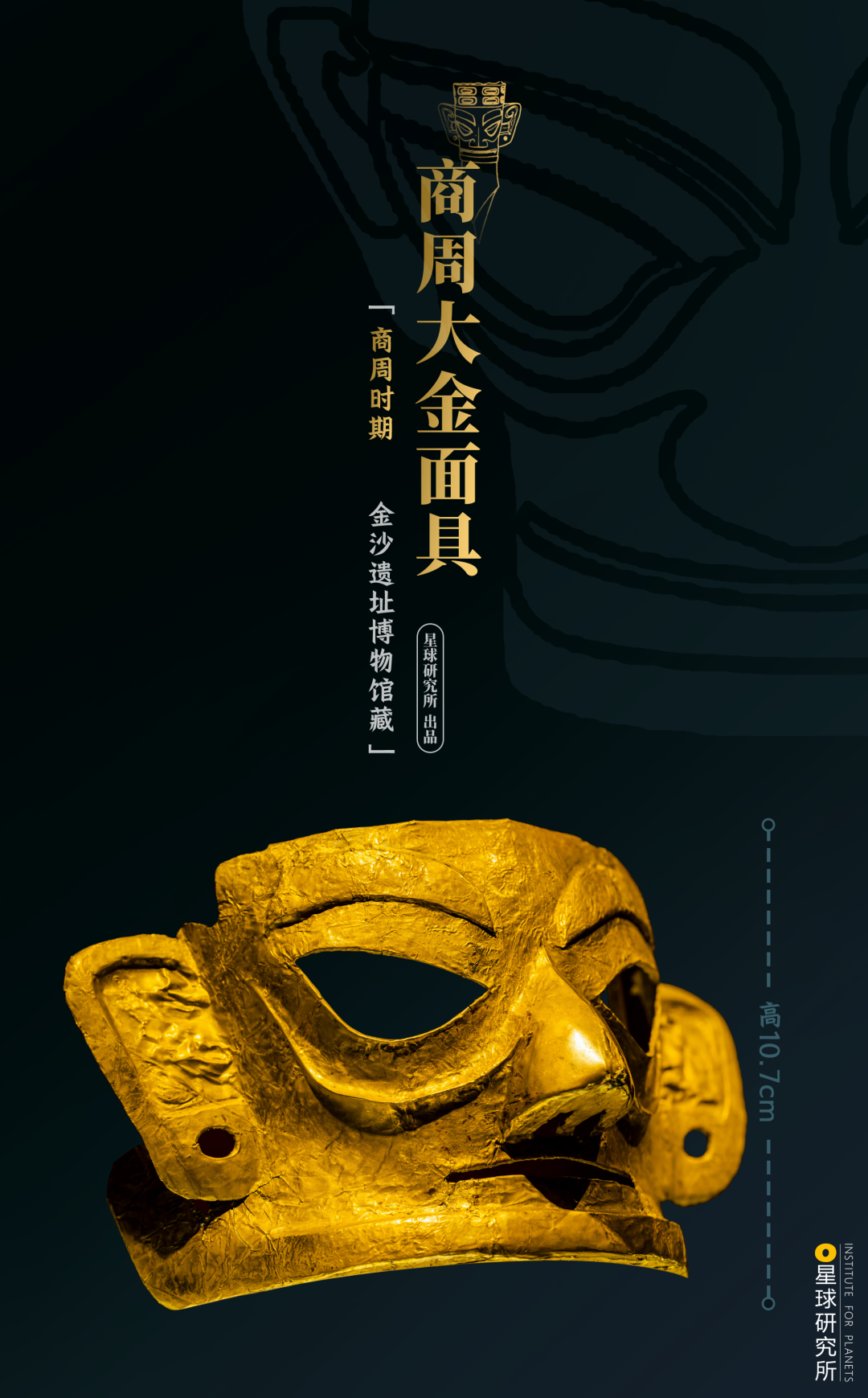
The artifacts unearthed at this settlement…
…bear striking similarities to those found at Sanxingdui.
(This specific type of gold mask has, to date, been discovered only at the Sanxingdui and Jinsha sites. Photography by Zhang Yan; Graphics by Feng Yizhuo / Planet Research Institute.)
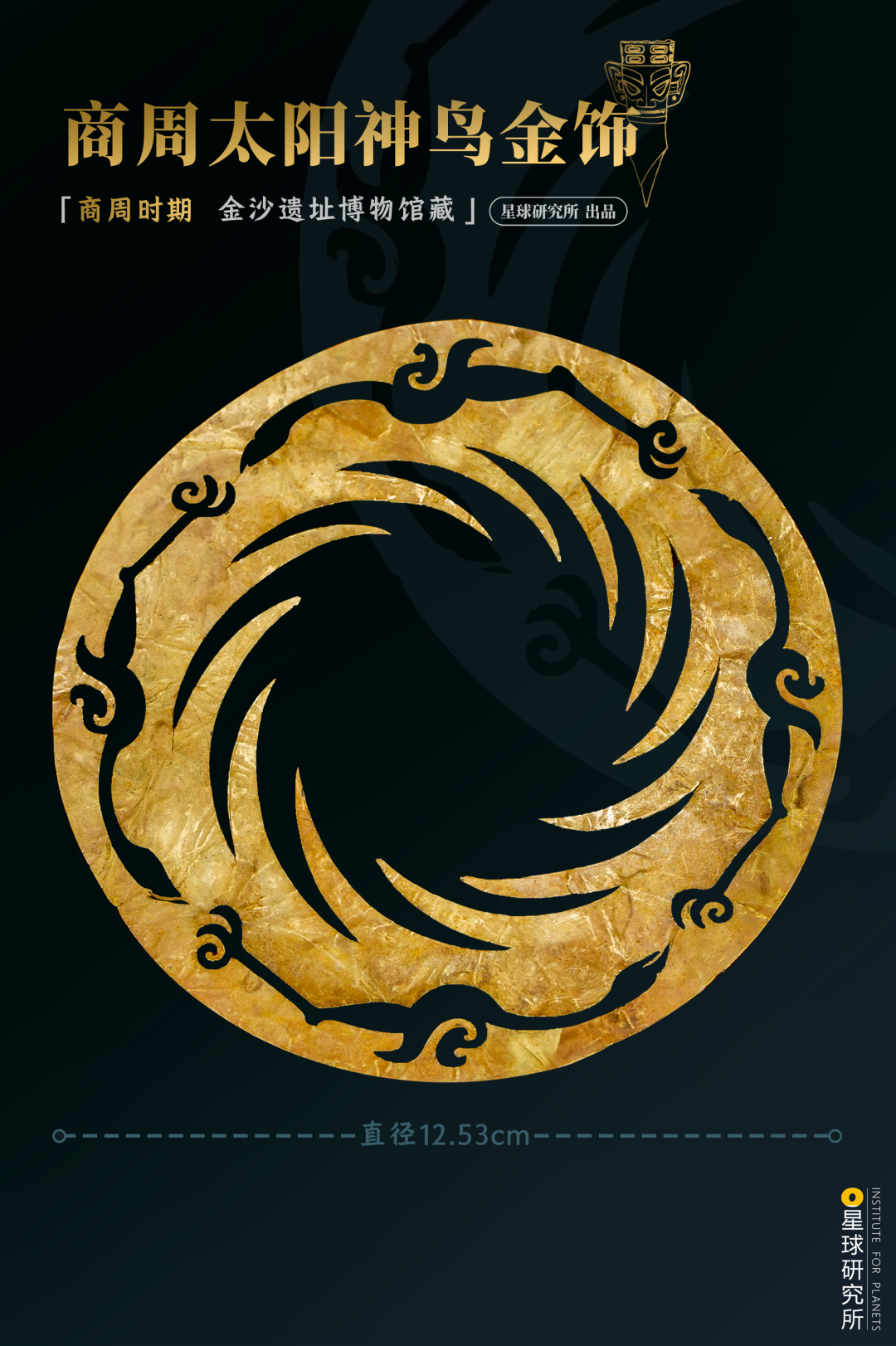
The people who inhabited Jinsha…
…likewise worshipped the sun and the divine bird.
(Four divine birds—arranged with their heads and feet touching—encircle the sun; this imagery may depict the legend of the “Golden Crow Bearing the Sun.” Photography by Zhang Yan; Graphics by Feng Yizhuo / Planet Research Institute.)
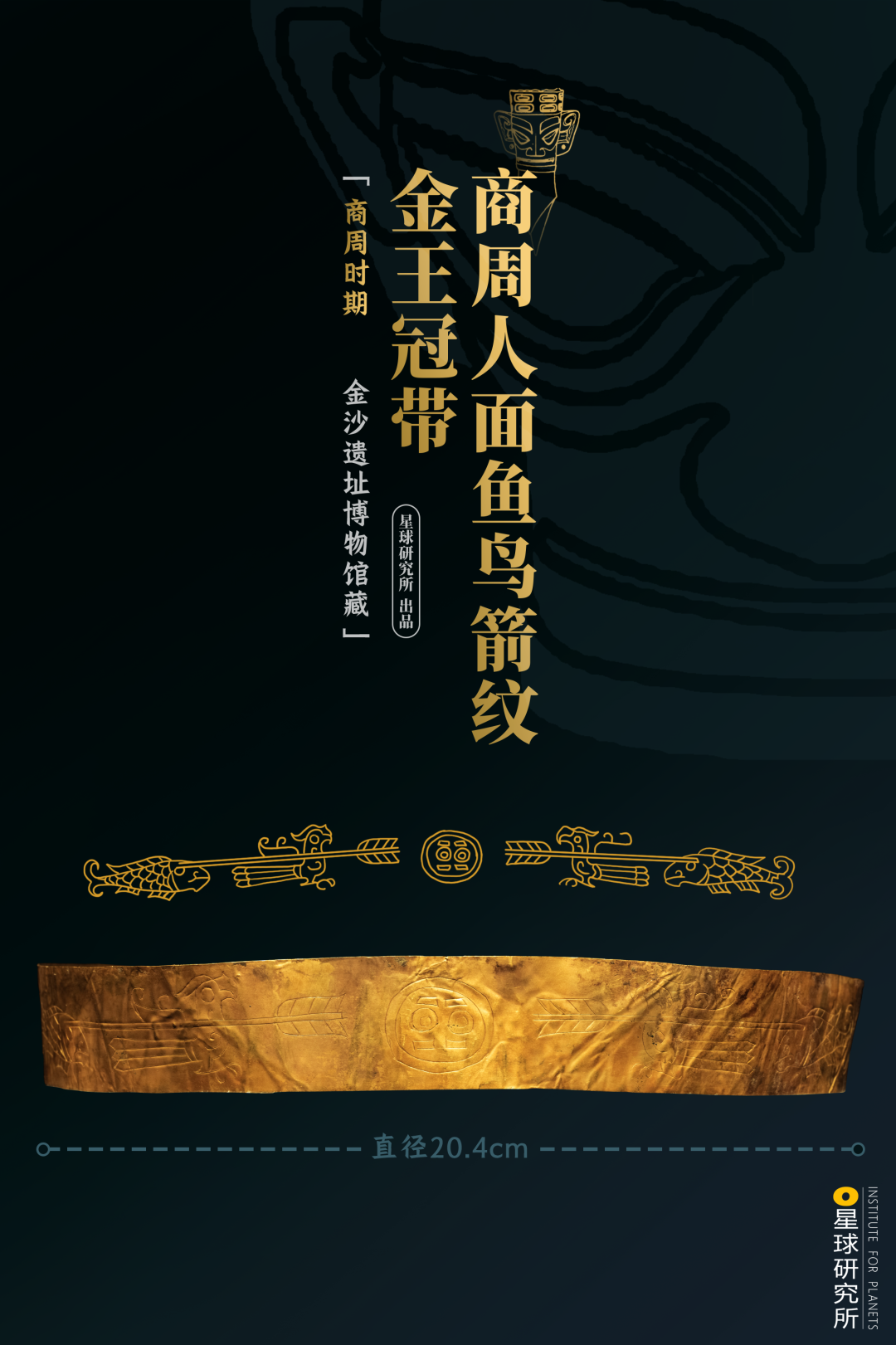
Adorning the gold ornaments—symbols of royal authority—
are motifs identical to those found on the Sanxingdui Gold Staff.
(They, too, are engraved with images of fish, birds, arrows, and human faces—patterns bearing a striking resemblance to those on the Sanxingdui Gold Staff. Photo by @Zhang Yan; Graphics by @Feng Yizhuo / Planet Institute)
All signs indicate
that the people of Jinsha and the people of Sanxingdui
shared the same set of theocratic values and belief systems.
A relationship of cultural succession likely existed between them.
Although they, too, worshipped deities,
the people of Jinsha were notably more “pragmatic.”
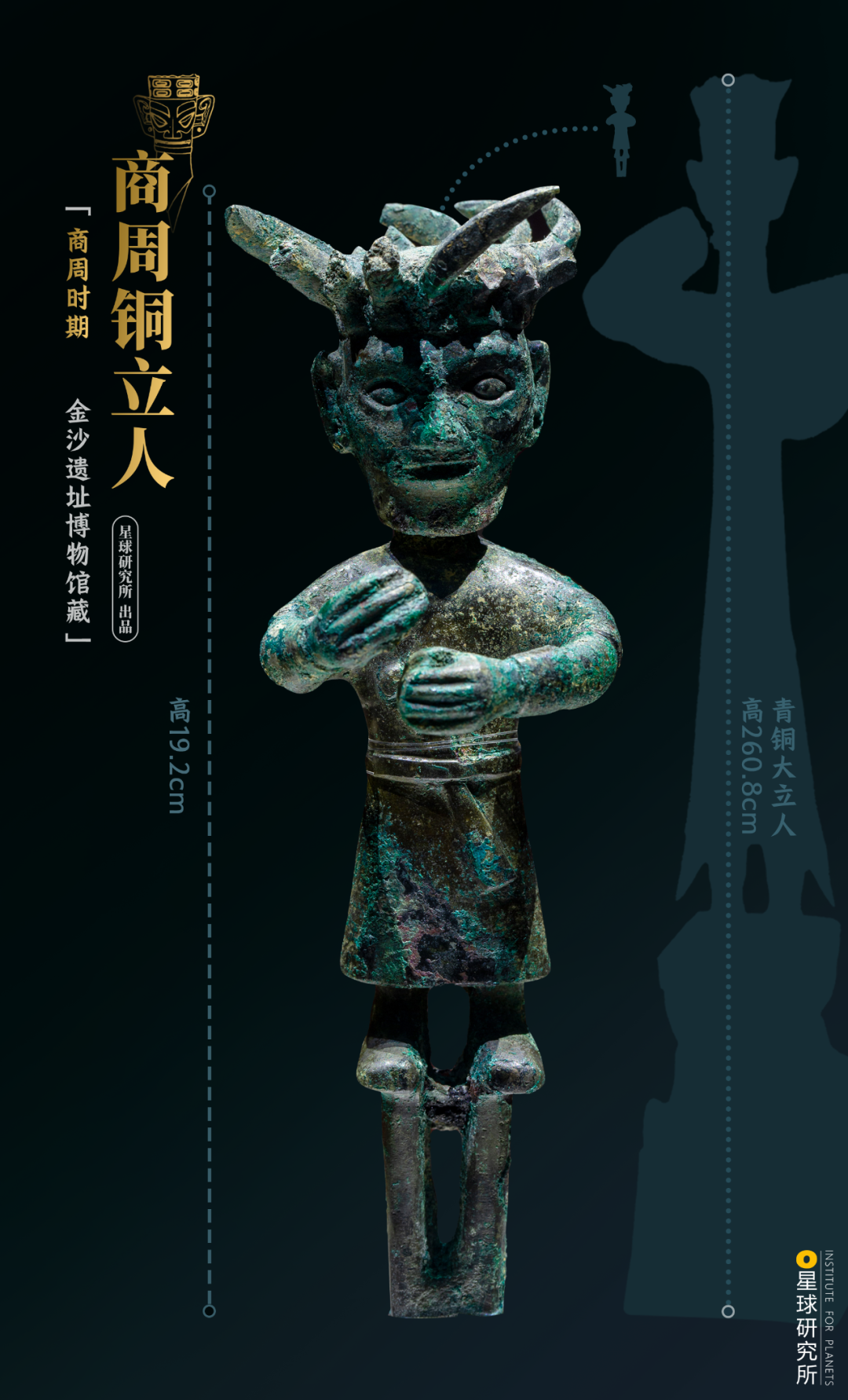
They ceased crafting monumental bronze vessels;
instead, their artifacts became smaller and more slender.
(This bronze standing figure stands less than one-tenth the height of its Sanxingdui counterparts—a shift that may signify the rise of secular political power and the corresponding decline of religious authority. Photo by @Zhang Yan; Graphics by @Feng Yizhuo / Planet Institute)
They continued to perform sacrificial rituals,
Yet they did not rely solely on such rites.
To tame the floods,
And to ensure the nation’s prosperity,
Human labor was indispensable.
The new King of Shu—Du Yu—
Clearly grasped this fundamental truth.
(Excerpted from Records of the States South of Mount Hua: The Chronicle of Shu)
“Later, a king named Du Yu ascended the throne; he instructed the people to devote themselves to agriculture.”
According to folklore, upon his death, he transformed into a cuckoo bird.
Whenever the grain-sowing season arrived,
He would call out, “Bu-gu! Bu-gu!"—urging the people to attend to their farming duties.
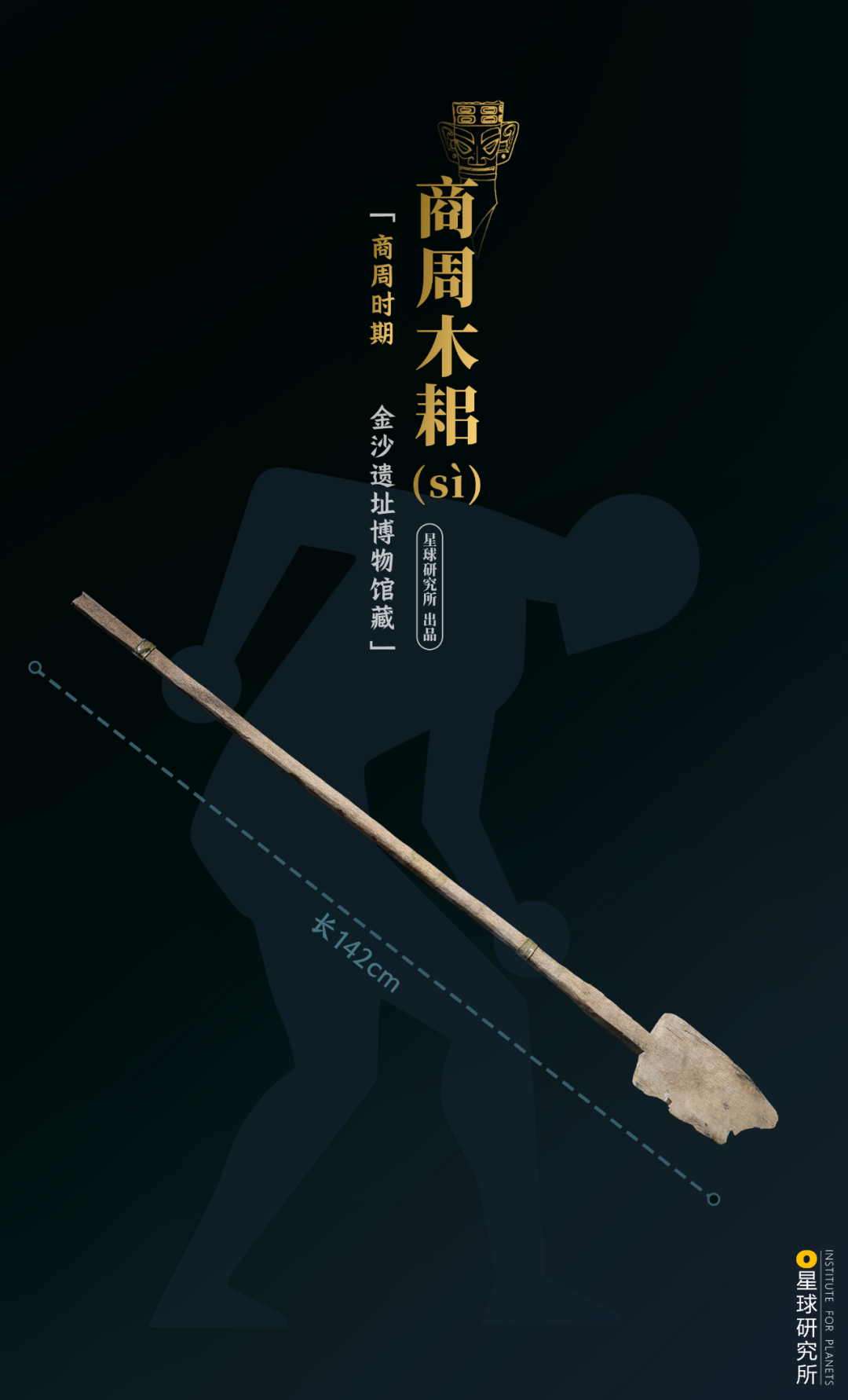
This serves as a vivid testament to the immense importance the Jinsha people placed on agriculture.
(This is currently the only relatively well-preserved wooden farming implement from the Shang and Zhou dynasties found in China. Photography: @Zhang Yan; Graphics: @Feng Yizhuo / Planet Institute)
As a political entity,
Sanxingdui may have reached its end;
Yet as a civilization,
It continued to flow on, unbroken.
Jinsha inherited its beliefs and culture,
Propelling the ancient Shu civilization to new heights of glory.
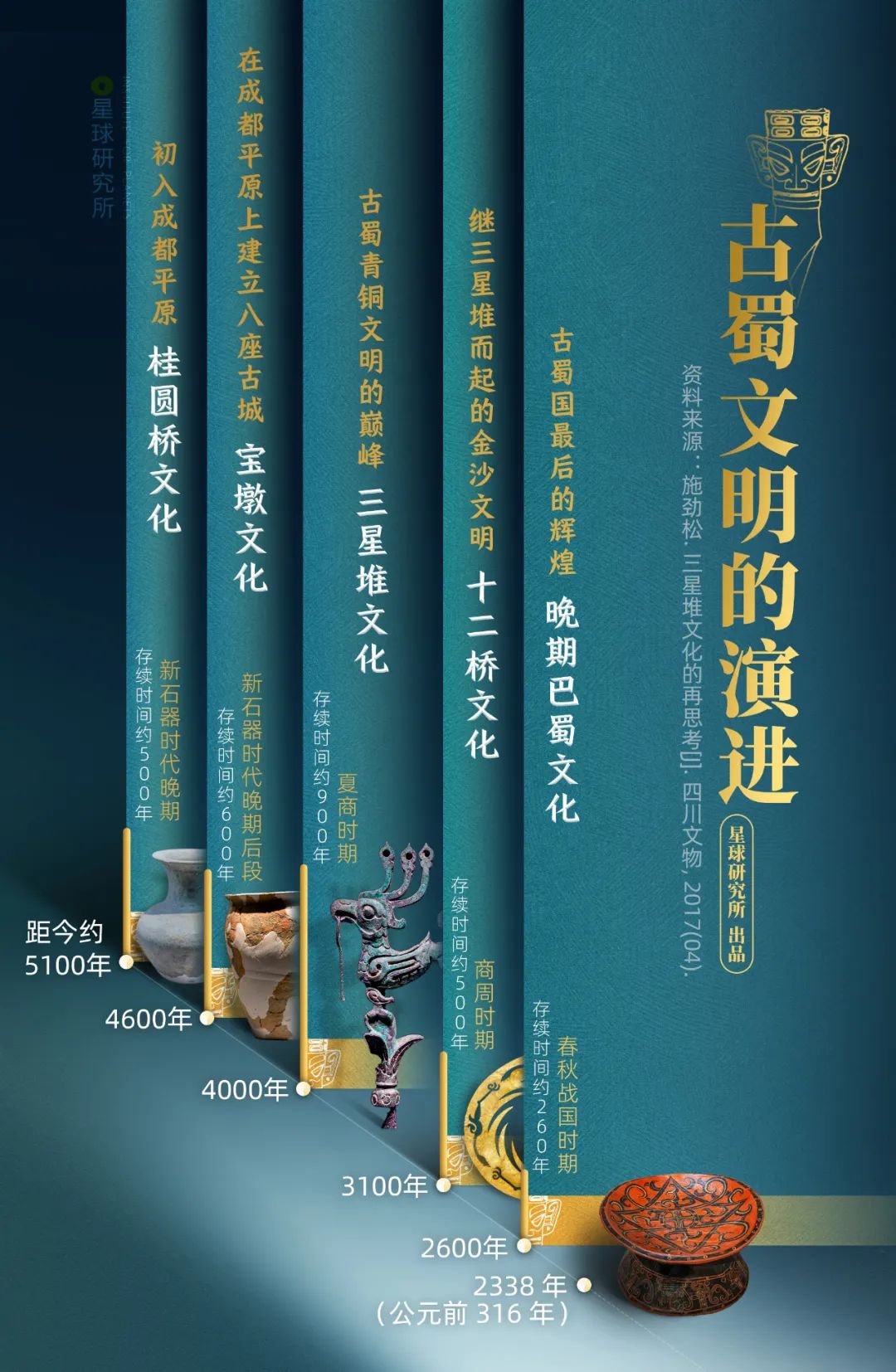
(The Twelve Bridges Culture—exemplified by the Jinsha Site—flourished from the late Shang Dynasty through the Spring and Autumn period, enduring for over 500 years. Photography: @He Shihai, @Zhang Yan, @Xu Jianfeng, & @Yuan Yiming; Graphics: @Wang Shenwen / Planet Institute)